


I-9 Verification vs. Notarization: Why a Notary Can't "Notarize" Your I-9 in Orlando

It's a common request we hear in Orlando: "Can you notarize my I-9 form?" While it's understandable why employers and employees alike might make this assumption, there's a crucial distinction. As your local notary service, we're here to clarify: notaries can and often do assist with Form I-9, Employment Eligibility Verification, but they do so as Authorized Representatives, not as notaries performing a notarial act. Understanding this difference is vital for compliance in 2025.

💡 Key Takeaways
Role Change: A notary acts as an "Authorized Representative" for Form I-9, not in their official capacity as a notary public.
Core Duty: The role of the Authorized Representative is to physically inspect identity and employment authorization documents presented by the employee.
Not a Notarial Act: I-9 verification is a certification of document inspection, not a sworn statement or acknowledgment.
No Seal: A notary public should never affix their notary seal to an I-9 form.
Compliance: Ensuring correct I-9 procedures prevents costly fines and ensures federal compliance for your business.

The Purpose of Form I-9
Form I-9 is a federal document mandated by U.S. Citizenship and Immigration Services (USCIS) to verify the identity and employment authorization of individuals hired for employment in the United States. Every new employee, whether working for a small business near Winter Park or a large corporation downtown, must complete an I-9 form.
The Role of an Authorized Representative
Federal regulations allow employers to designate an "Authorized Representative" to complete Section 2 of the I-9 form on their behalf. This representative's duties are straightforward:
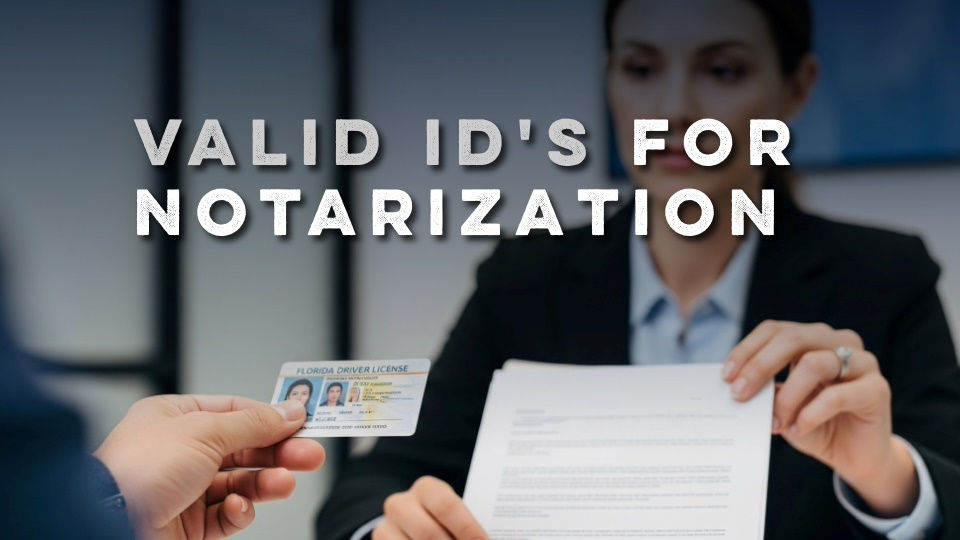
🗝️ Physically Inspect Documents: The representative must physically examine the employee's original, unexpired identity and employment authorization documents (from the Lists of Acceptable Documents) to determine if they reasonably appear to be genuine and relate to the person presenting them.
🗝️ Complete Section 2: They then fill out Section 2 of the I-9 form, certifying that they have completed this inspection.
This is where notaries often come in. Employers frequently choose notaries to act as their Authorized Representatives due to their reputation for trustworthiness, attention to detail, and accessibility, especially for remote hires throughout Florida.
The Critical Distinction: Verification vs. Notarization
⭐ Here's the core difference: I-9 verification is not a notarial act.
When a notary performs a standard notarization (like a Jurat or an Acknowledgment), they are either:
Administering an oath or affirmation (e.g., for an affidavit) and certifying that the signer swore to the truthfulness of the document's content. |
Certifying that a signer personally appeared before them and acknowledged signing a document. |
These acts require specific notarial wording and, crucially, the application of the notary's official seal. The notary is certifying something about the signing process or the signer's oath.
For an I-9, however, the Authorized Representative (even if that person is a notary) is simply certifying that they have inspected the presented documents and that they appear legitimate. There is no oath administered to the employee regarding the truthfulness of the I-9 form's content, nor is there an acknowledgment of a signature in the typical notarial sense.
❌ Why a Notary Seal is Incorrect (and Should be Avoided)
USCIS is very clear on this point: a notary public acting as an Authorized Representative for Form I-9 should not affix their notary seal to the form. Doing so can cause confusion and incorrectly imply that a notarial act has taken place, which it has not. The form simply requires the representative's signature, printed name, and the date.

For employers navigating remote hiring in 2025, especially those participating in E-Verify, new regulations allow for permanent remote document examination. However, for many others, or for added assurance, an in-person Authorized Representative in Orlando remains a critical component of compliant I-9 completion. Choosing a knowledgeable professional ensures that the form is completed accurately, adhering to federal guidelines, without the common mistake of inappropriate notarization.
Navigating I-9 compliance can feel complex, but understanding the precise role of an Authorized Representative is key. While a notary cannot "notarize" an I-9, they serve as highly capable Authorized Representatives, ensuring proper document inspection and completion of Section 2. For your Orlando business, getting I-9 verification done right is essential for federal compliance and avoiding potential penalties. If you're hiring remote employees or need a reliable, compliant Authorized Representative for your I-9 forms, contact us today. We'll help you ensure your forms are completed accurately—without unnecessary seals.


Comments