


Starting a Remote Job? How a Notary Can Act as an Authorized Representative for Your I-9

Hiring for a remote role while living in Lake Nona or Winter Park? If your new employer asks for an I‑9 identity verification, a Florida notary can act as the employer’s "authorized representative" to complete Section 2 — but there are important limits and local best practices to follow under current 2026 regulations. This guide explains, in plain English, what Orlando job‑seekers and HR teams need to know.

💡 Key Takeaways
A notary can be designated by an employer to complete Section 2 of Form I‑9 as an authorized representative — but that task is not a notarization and must not include a Florida notary seal.
USCIS requires a physical inspection of the employee’s original identity and employment eligibility documents for Section 2; Remote Online Notarization (RON) is generally not accepted for I‑9 inspection unless DHS specifically authorizes it.
Florida notary laws about appearance and prohibited acts still matter as risk management: do not stamp, add an acknowledgment/jurat, or imply you are performing a notarial act when completing an I‑9.
Best practice: get written confirmation from the employer that you are the authorized representative, perform the in‑person document inspection, and complete Section 2 only.
I‑9 forms are employer compliance records and are not recorded with the Orange County Clerk — local recording fee pages (e.g., Orange County) are unrelated but useful for other notary business questions.
What it means for Orlando employees and HR
If you live in Orlando (Lake Nona, Winter Park, downtown near the Orange County Courthouse), and your employer asks you to complete an I‑9, they can name an "authorized representative" to perform Section 2. That representative can be a Florida notary — but when acting in that role the notary is not performing a notarial act and must follow USCIS instructions (including not using a notary seal).
Understanding the Legal Landscape: 2026 Florida & Federal Residency Regulations
USCIS allows employers to designate an authorized representative to complete Section 2 (the document inspection and attestation). See USCIS guidance: notary may serve as the employer’s agent but is not acting as a notary for this task and must not use a notary seal.
Florida notary law (Chapter 117) governs notarizations and prohibits certain acts (for example, notarizing without physical appearance). Those appearance rules apply to notarizations — but because I‑9 completion is not a notarization, the legal status is different. Still, Florida prohibitions are relevant for risk management: do not make the I‑9 look like a notarization.
Remote Online Notarization (RON) is covered by Chapter 117, Part II and Department of State guidance, but USCIS generally requires physical in‑person document inspection for Section 2 unless DHS announces an alternative. In short: RON usually won't substitute for the in‑person inspection required for I‑9 Section 2.
Practical checklist for Orlando notaries assisting with an I‑9 form
Follow these steps to protect yourself, your employer, and the employee:
Confirm in writing (email or signed instruction) that an employer has designated you as the employer's "authorized representative" and that you will complete Section 2 only.
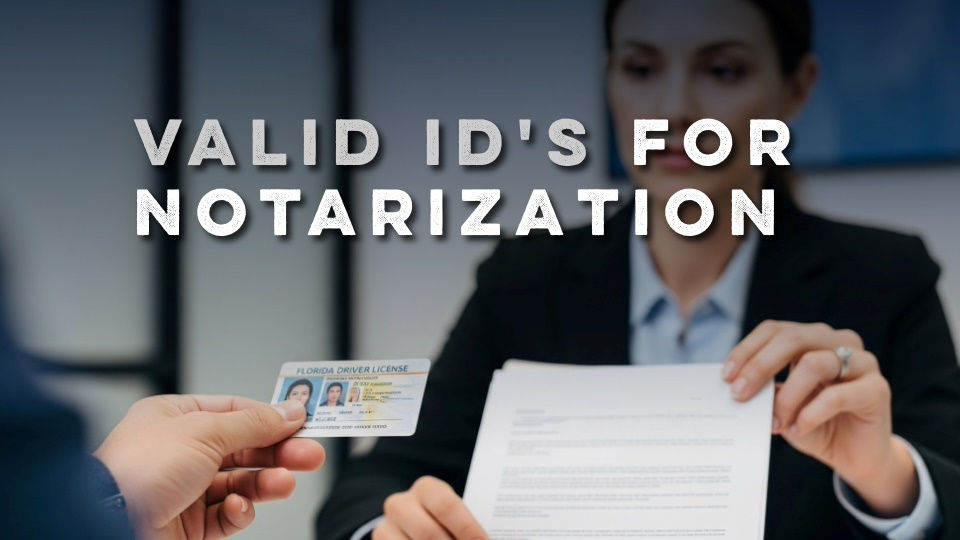
Inspect original documents in person as required by USCIS. Do not accept photocopies or screenshots for Section 2 unless the employer instructs otherwise under a specific temporary program authorized by DHS.
Complete Section 2 per USCIS instructions and sign as the employer’s authorized representative (enter your name and title as "Authorized Representative for [Employer Name]").
Do not affix a Florida notary seal or attach any notarial certificate (acknowledgment/jurat) to the I‑9. USCIS specifically advises against using a notary seal on Form I‑9.
Avoid any extra language or markings that could be read as a notarial act (no Florida notary wording, no jurat/acknowledgment blocks, no statements certifying more than the I‑9 requires).
Do not give legal advice or interpret immigration law for the employee — follow employer instructions and the Form I‑9 guidance. If asked legal questions, refer them to employer legal counsel or USCIS resources.
Keep a record of the employer designation and the date/location of the inspection (helpful for both compliance and future questions).
Local notes for Orlando operations
I‑9s are employer compliance forms and are not recorded with the Orange County Comptroller/Clerk. If clients ask about local filing or recording fees (for unrelated matters), Orange County’s Recording Fees page is a reliable local reference.
If you meet employees at popular Orlando locations (Lake Nona business centers, Winter Park offices, or near the Orange County Courthouse), treat each meeting as an in‑person inspection and follow ID‑document inspection best practices.
Common FAQs
Q: Can a Florida notary use a notary seal on an I‑9? A: No. USCIS instructs that if a notary acts as the employer’s authorized representative for Form I‑9, the notary is not acting as a notary for that task and must not use a notary seal.
Q: Can I use Remote Online Notarization (RON) for an I‑9? A: Generally no. USCIS requires physical inspection of original documents for Section 2 unless DHS issues a specific alternative. Florida RON rules remain in effect for notarizations, but RON is usually not accepted for I‑9 inspection under current federal practice.
Q: Should I notarize the signature on an I‑9? A: No. Form I‑9 does not require notarization. Adding a notarization or seal can create legal confusion and risk under Florida law.
Risk management tips for HR teams in Orlando
Require written confirmation when designating an authorized representative.
Train third‑party representatives (including notaries) on what to inspect and what not to do (no seals, no notarizations, no legal advice).
Keep I‑9s in your employer personnel file; they are not county recorded documents.
Starting a remote job from Orlando? A Florida notary can serve as your employer’s authorized representative for Form I‑9 Section 2, but only under clear employer designation and with careful compliance steps:
in‑person inspection, no notary seal, and no notarial certificate attached.
If you’re in Lake Nona, Winter Park, downtown Orlando near the Orange County Courthouse, or elsewhere in Orange County and need professional identity verification, we can help. Hired for a new remote position? We can provide the professional identity verification your employer needs to get you started on day one. Contact us to schedule Orlando mobile I‑9 support or discuss Remote Online Notary options for other documents.


Comments