


Why Your Translated Documents Need a Notarized Certificate of Accuracy

If you live in Orlando — whether you’re in Lake Nona, Winter Park, or near the Orange County Courthouse — and you’re submitting translated documents for immigration, school, or official use, you may be asked for a “notarized translation.” Under current 2026 regulations in Florida, that phrase usually means a translator’s sworn affidavit plus a notary’s jurat. This guide explains, in plain English, what Florida notaries can and cannot do and how to get a proper Certificate of Accuracy for your translated documents.

💡 Key Takeaways
Florida notaries may NOT certify the accuracy of a translation themselves — they can only notarize the translator’s signature on an affidavit (a jurat).
A proper notarized translation package usually includes the translation, a Translator’s Affidavit, and a notary jurat completed in statutory form (venue, act type, date, ID, notary signature/seal).
Signers must personally appear either physically or via authorized audio‑video technology (RON). Florida’s RON framework remains valid in 2026.
The general maximum fee for a traditional notarial act in Florida is $10 unless another statute applies.
USCIS requires a translator’s certification of accuracy and competence, but usually does not require notarization — some schools or foreign authorities might.
What people mean by a “notarized translation”
In Orlando, when a school, immigration office, or foreign institution asks for a “notarized translation,” they usually expect three things:
📄 The translated document (the English version, or the foreign-language version with English translation),
✒️ A Translator’s Affidavit (a signed, sworn statement where the translator certifies the translation is accurate and states their competence), and
📃 A notary’s jurat notarizing the translator’s signature on that affidavit.
Florida does not allow notaries to certify the accuracy of translations themselves — the notary’s role is to verify the identity and willingness of the person signing the affidavit and to administer the oath or affirmation.
What a Florida notary can — and can’t — do
✔️ Can: notarize the translator’s signature on an affidavit using a jurat (the translator swears/affirms the translation is accurate and signs in the notary’s presence).
✔️ Can: perform that jurat in-person or via Remote Online Notarization (RON) using authorized audio-video technology, provided the notary is properly registered for RON.
✔️ Can: complete the jurat or acknowledgment in substantially the statutory form and include required elements such as venue, act type (sworn/acknowledged), date, signer name, ID method, notary signature and seal (see Fla. Stat. § 117.05).
✖️ Can’t: notarize and thereby “certify” that the translation itself is accurate as a notarial act. The translator certifies accuracy within the affidavit — not the notary.
✖️ Can’t: notarize their own translation signature. If the notary is also the translator, Florida advises having a different notary notarize the affidavit to avoid notarizing one’s own signature.
(These points are consistent with the Florida Department of State Notary Education FAQ and statutory requirements in Chapter 117 — current as of 2026.)
💬 The Translator’s Affidavit: what it should say
A Translator’s Affidavit generally includes:
A statement that the translator is competent in both the source language and English,
A statement that the translation is a full and accurate translation of the original,
The translator’s printed name and contact information,
The translator’s signature, executed in front of a notary (jurat), and
The notary’s jurat certificate with required elements (venue, date, ID method, notary signature/seal).
Keep language straightforward — it’s the sworn statement that the translator is competent and the translation is accurate. If you plan to submit documents to USCIS, note that USCIS requires a full English translation with a certification from the translator (8 CFR 103.2(b)(3)), though USCIS does not generally require the certification be notarized.
📲 Remote Online Notarization (RON) in 2026 — what Orlando clients need to know
Florida’s RON framework remains in effect in 2026 under Chapter 117, Part II; notaries who are registered to perform RON can notarize translator affidavits remotely using authorized audio-video technology.
The signer (translator) must personally appear to the notary either physically or via the approved audio‑video platform.
RON is useful for Orlando clients who prefer not to travel to a physical office — for example, translators based in Lake Nona or a student in Winter Park can complete a jurat remotely if both parties use an approved RON platform.
Refer to the Florida Department of State RON registration page for details on registered notaries and technical requirements.
☑️ Practical steps for Orlando residents
Hire a qualified translator or confirm your translator’s competence in both languages.
Ask the translator to prepare a Translator’s Affidavit (see checklist above).
Choose how to notarize:
In-person at a notary (e.g., a mobile notary who travels to Lake Nona or Winter Park), or
Remotely with a registered Florida RON notary.
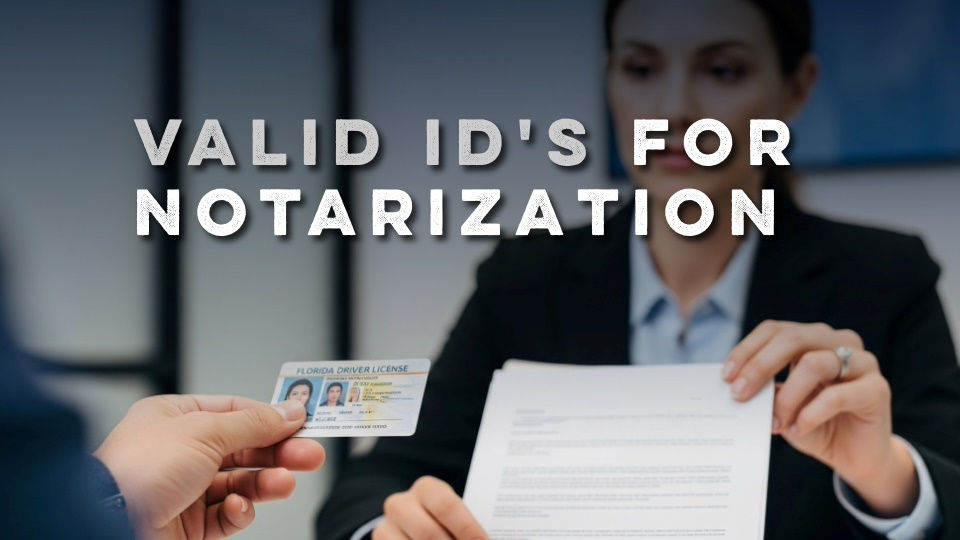
Bring appropriate ID to the notary appointment (or be ready to complete identity verification via the RON platform).
Ensure the notary completes a jurat in substantially the statutory form (venue, act type “sworn/affirmed,” date, signer name, ID method, notary signature/seal).
Keep copies of both the translation and the notarized affidavit for your records and for submission to the receiving agency (USCIS, school, foreign authority).
🕐 Fees and timing
The general statutory maximum fee for a traditional in-person notarial act in Florida is $10 per act (see the Governor’s Notary Reference Manual). RON and certain specialty notarial services may have different fee rules — confirm with your notary.
Allow time for the translator to prepare the affidavit and for you to schedule a notary appointment (same-day mobile or online notarizations are often available).
❓ Common questions (quick answers)
Do I need notarization for USCIS? Usually USCIS requires a translator’s certification but not necessarily notarization; however, some institutions or foreign authorities do ask for a notarized affidavit — check the specific recipient’s requirements.
Can the notary also be the translator? Legally yes, but the notary should not notarize their own signature. Have a different notary complete the jurat to avoid self‑notarization issues.
Can the notary “certify” the translation? No. Florida notaries cannot certify translation accuracy — only the translator can swear or affirm that the translation is accurate via an affidavit, and the notary notarizes the signature on that affidavit.
(For statutory details see Fla. Stat. § 117.05 and the Florida Department of State Notary Education FAQ.)
Need a notarized Translator’s Affidavit for USCIS, a school, or another agency? Our Orlando team can help — we offer mobile in-person notarizations across Lake Nona, Winter Park, and greater Orange County, and Remote Online Notary (RON) services for clients who prefer a virtual appointment. Contact us to schedule your Orlando Mobile or Remote Online Notary services and secure your Certificate of Accuracy today.


Comments