


Knowing the Limits: When a Notary Is Legally Required to Refuse Service

If you're in Lake Nona, Winter Park, or meeting near the Orange County Courthouse in downtown Orlando, it's important to know that notaries are not required to notarize every paper they're handed. Under current 2026 regulations, Florida law includes clear situations where a notary must say “no” — and understanding those limits can save time, prevent rejected recordings, and protect both you and the notary.

Key Takeaways
Florida law (F.S. § 117.05 and § 117.107) requires a notary to refuse in specific situations—identity problems, signer not appearing, blank/incomplete documents, incapacity concerns, and refusal to take an oath.
A notary must personally know the signer or obtain satisfactory evidence of identity and record the ID method in the notarial certificate.
The signer must appear before the notary either physically or by authorized audio‑video technology for online notarizations; the certificate must state which method was used.
Notaries may not notarize blank or incomplete documents or hand off blank notarial certificates for later use.
If a jurat (oath/affirmation) is required and the signer refuses to swear or affirm, the notary must refuse that jurat and may suggest an alternative only if the document/recipient allows it.
Why Orlando residents should care
Notarizations are a routine part of real estate closings, affidavits, and many legal forms in and around Orlando—from Lake Nona transactions to estate paperwork for Winter Park families or filings taken to the Orange County Courthouse. But a notary's job isn't automatic: Florida law sets out specific, mandatory refusal rules so notarizations are valid and defensible.
When must a Florida notary refuse?
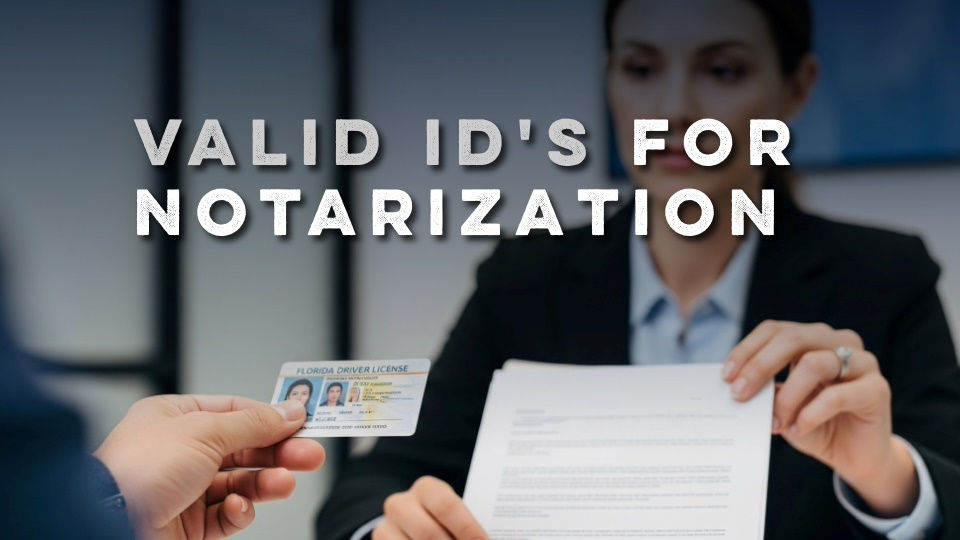
1) ❌🪪 Missing valid ID (satisfactory evidence)
Plain English: If the notary doesn't personally know you and you can't show an acceptable ID, the notary must refuse to notarize. The notary must also note which ID was used in the notarial certificate.
Legal pointer: See F.S. § 117.05(5) and related certificate requirements under F.S. § 117.05(4).
2) ❌✒️ Signer not present (physical or lawful online appearance)
Plain English: The signer must appear before the notary. That appearance can be in person or by authorized real‑time audio‑video technology for Remote Online Notarizations (if the notary is authorized to use them). If the signer is not present, the notary must refuse.
Legal pointer: See F.S. § 117.107(9) and F.S. § 117.05(4)(c) (the certificate must indicate whether appearance was physical or online).
3) ❌📄Blank or incomplete documents
Plain English: A notary cannot notarize a signature on a document that is blank or missing required content. Notaries also may not give someone a blank notarial certificate or affidavit form to fill in later.
Legal pointer: See F.S. § 117.107(10) and § 117.107(3).
4) ❌💭 Concerns about mental capacity
Plain English: If it appears the signer can't understand the nature or effect of the document at the time of notarization, the notary must refuse. There are also narrower prohibitions where the notary actually knows the signer has been adjudicated mentally incapacitated under certain conditions.
Legal pointer: See F.S. § 117.107(5) and § 117.107(4).
5) ❌💬 Refusal to swear or affirm when a jurat is required
Plain English: For jurats (where the signer must swear or affirm), the notary must administer the oath/affirmation. If the signer refuses to take the oath, the notary cannot complete a jurat and must refuse that notarial act. In some cases an acknowledgment might be an acceptable alternative—but only if the document recipient allows it.
Legal pointer: See F.S. § 117.03, F.S. § 117.05(4) & (13), and F.S. § 92.50.
Practical Orlando notes (recording and local steps)
Many documents destined for recording at the Orange County Clerk/Comptroller require a valid acknowledgment or jurat that includes the identity method and appearance method described in F.S. § 117.05(4)-(5). If those elements can't be met, the notary must refuse—even if the signer is rushing to record at myorangeclerk.com or the Orange County Courthouse.
Be careful: some online searches can return an Orange County (California) recorder fee page. For local Orlando recording info, rely on the Orange County, Florida official portal: https://www.myorangeclerk.com.
What to bring and how to avoid a refusal (checklist)
Acceptable government photo ID or other satisfactory evidence (or arrange for a credible witness per statute).
Do not bring incomplete forms or blank pages—fill in all blanks before the appointment.
If a jurat is requested, be prepared to take an oath or affirmation.
If you cannot appear physically, confirm ahead of time whether an authorized Remote Online Notary is available and that the document recipient accepts online notarization.
Recent regulatory context — what changed going into 2026
The core refusal grounds above remain in effect under the latest statutory compilations through 2025 and into current 2026 practice. Also note a 2025 law (effective 7/1/2025) adds enforcement tools against misleading “notario/immigration” representations; this affects how notaries describe services and refusals to the public, particularly when dealing with vulnerable customers.
What a notary will do if they must refuse
Explain briefly and professionally which statutory requirement isn't met (e.g., ID, presence, incomplete document).
Offer practical next steps: acceptable ID to bring, how to complete the form correctly, or whether a Remote Online Notarization is an option.
When appropriate, suggest alternatives (for example, an acknowledgment instead of a jurat only if the document/recipient permits it).
Local help: mobile and remote options in Orlando
If you can't make it downtown to the Orange County Courthouse, many Orlando notaries provide mobile visits in neighborhoods like Lake Nona and Winter Park or Remote Online Notarization (if the notary is authorized). These options can help meet the "appearance" requirement when done properly under Florida law.
Notarization helps protect the integrity of important transactions, but Florida law also protects signers and the public by requiring notaries to refuse when legal safeguards can't be met. Under current 2026 regulations, the common refusal triggers are identity problems, lack of appearance, blank/incomplete documents, incapacity concerns, and refusal to take required oaths. Unsure if your paperwork is ready for notarization? Review our quick preparation guide or contact us to confirm your documents before your appointment. Need an Orlando Mobile Notary or an authorized Remote Online Notary for Lake Nona, Winter Park, or downtown near the Orange County Courthouse? Contact us today and we'll help get your documents ready and notarized correctly.


Comments